DexWrist: A Robotic Wrist for Constrained and Dynamic Manipulation

MIT1
(Under Review)
Join Waitlist to Purchase a DexWrist!

Motivation

The spatial orientation of an end-effector such as a hand or a gripper is closely tied to its ability to perform a desired task [...] Yet both the academic and industrial research communities have tended to place more focus on hand/gripper development than that of wrist systems.

Recent prosthetics investigations, however, have shown that increased dexterity in wrist prostheses may contribute more to manipulation capacity than a highly dexterous terminal device with limited wrist capability. [1]

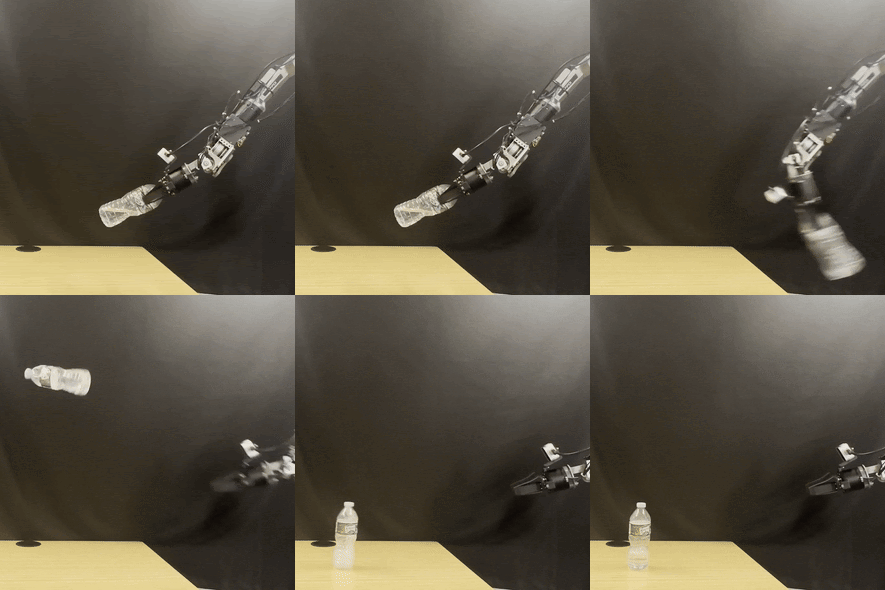
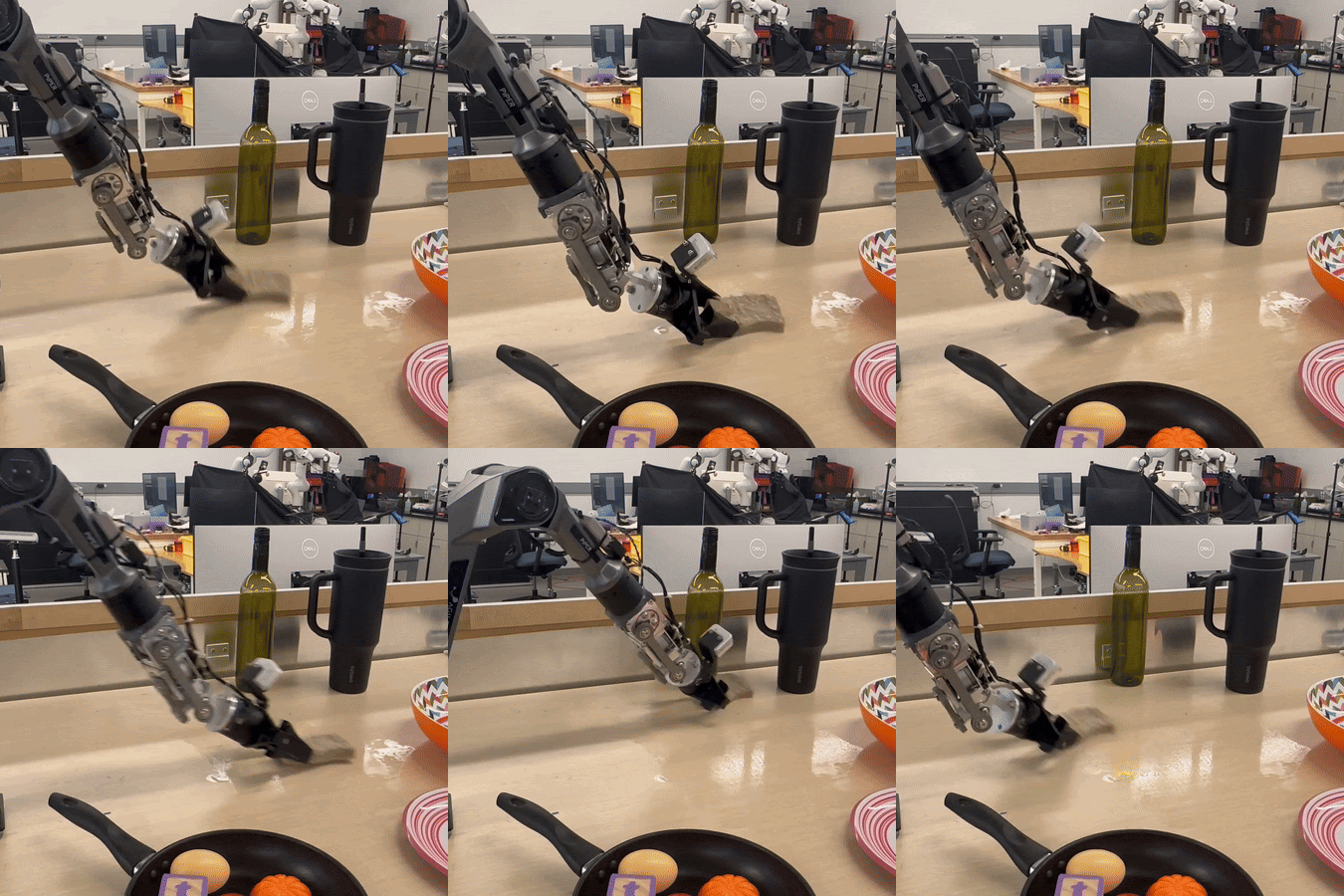
DexWrist enables highly dynamic and contact-rich tasks

Bottle Flip

Demonstration (1x Speed)

Agile Wipe

Demonstration (1x Speed)

Robust Wipe

Autonomous (1x Speed)


(1X Speed) DexWrist performs highly dynamic tasks with human-level wrist dexterity.

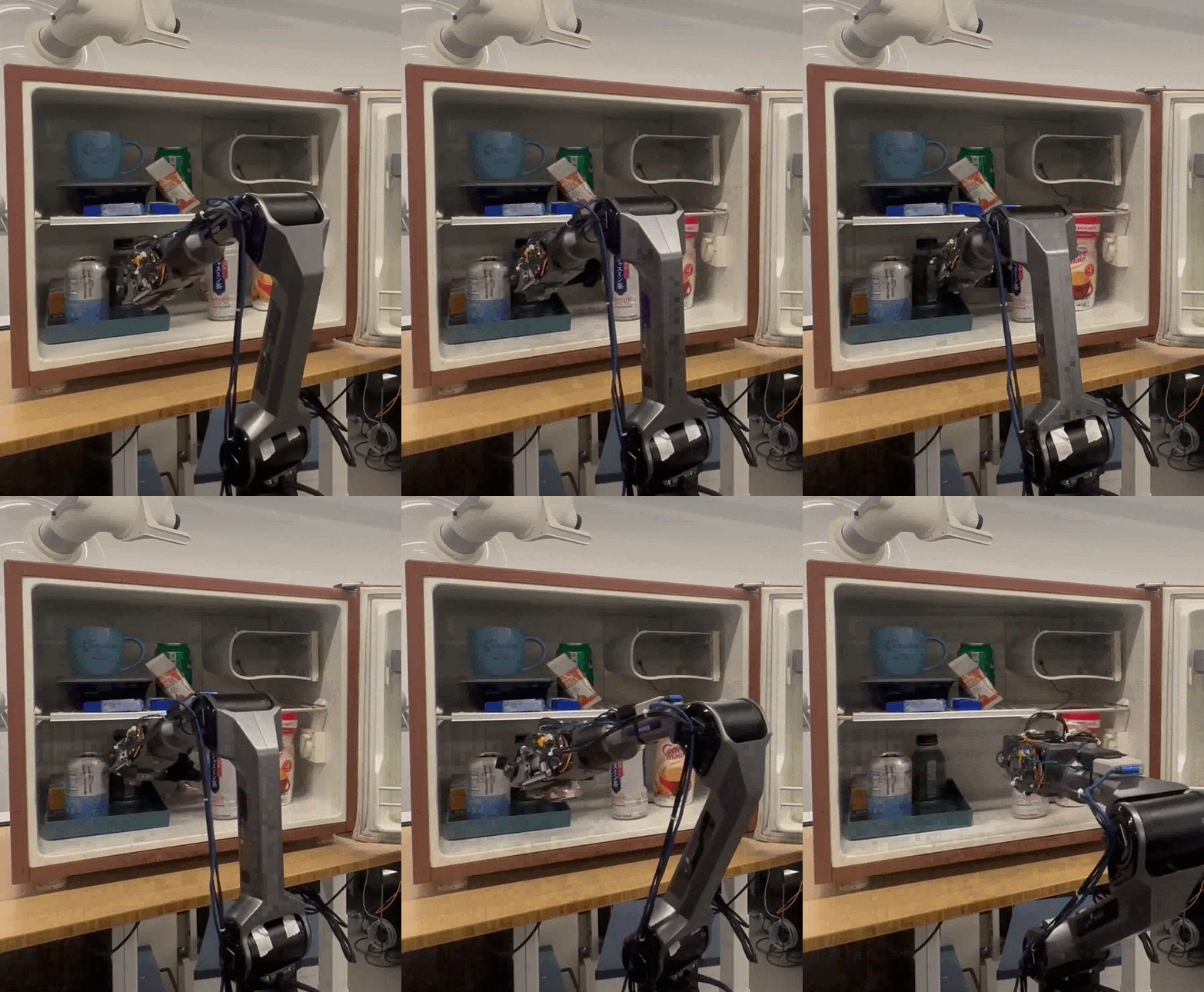
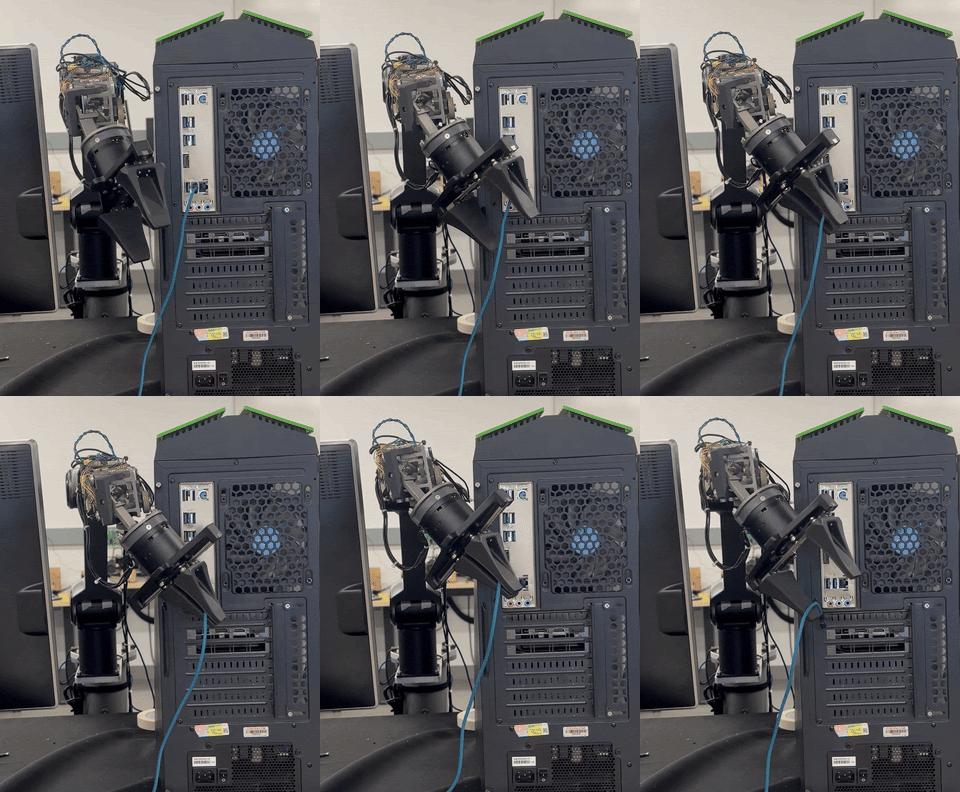
DexWrist enables constrained-space manipulation

Fridge Pick

Demonstration (1x Speed)

Cable Unplug

Demonstration (1x Speed)

Drawer Pick

Demonstration


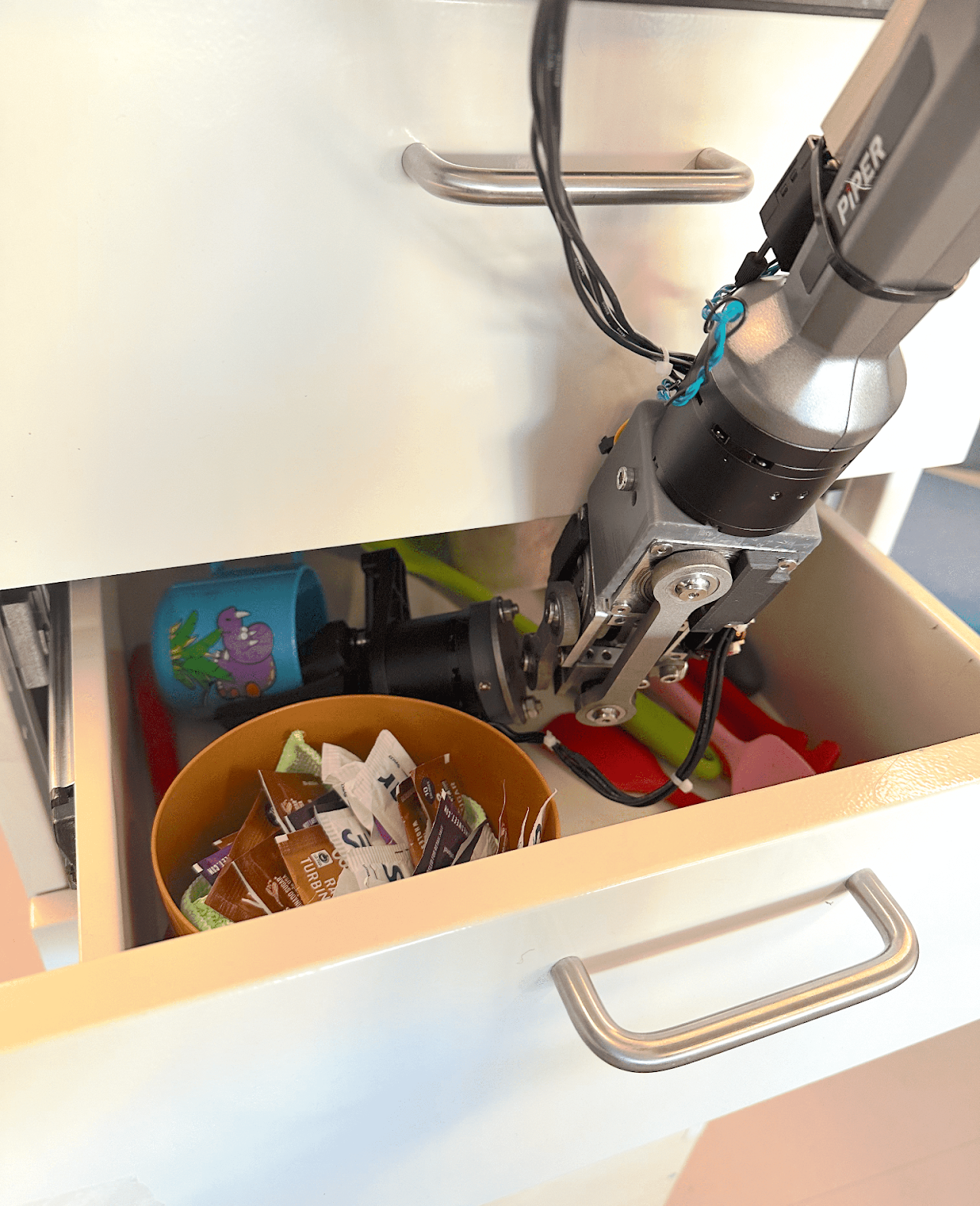
(1X Speed) DexWrist enables manipulation in constrained spaces where traditional wrists fail.

Why DexWrist?

  • Enables constrained, dynamic manipulation tasks on any robot arm
  • Torque transparency and easily simulatable kinematics enables dynamic policy learning
  • Facilitates faster teleoperation for more scalable data collection
  • Reduces trajectory lengths, making policy learning more efficient

Decoupled Parallel Kinematic Mechanism

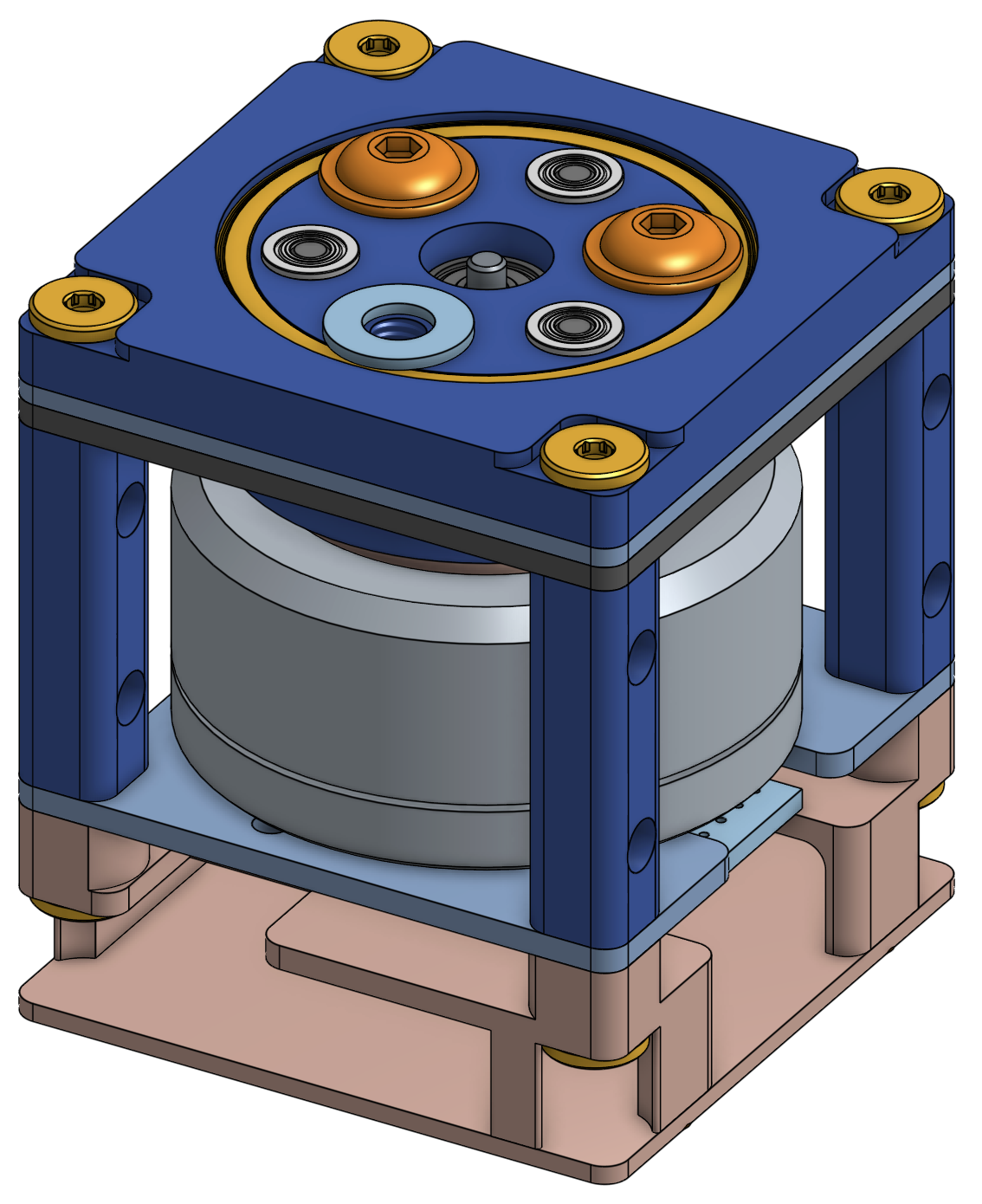
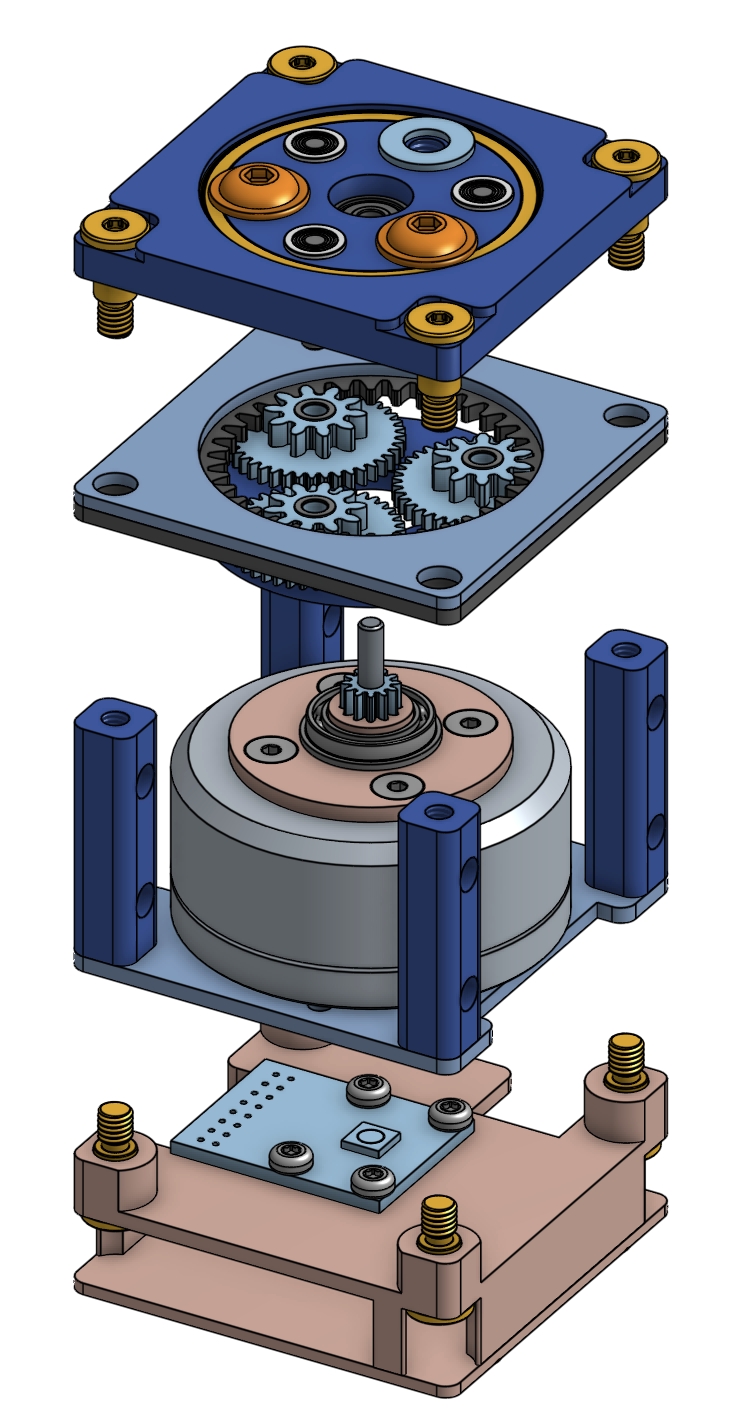
A novel 2-DOF Parallel Kinematic Mechanism (PKM) achieves human-like kinematics with co-located DOFs while maintaining a one-to-one mapping between each actuator and output DOF. This improves constrained space performance by reducing arm movement needed for end effector rotation, provides more intuitive teleoperation, and simplifies the constraint jacobian. The final DOF is achieved by mounting the wrist to an arm.

Quasi-Direct Drive Actuators

Custom Quasi-Direct Drive (QDD) actuators with brushless motors and a 13:1 planetary gearbox allows for dynamic tasks due to its backdriveability and speed, much how humanoid robots achieved dynamic movement using such actuators.

DexWrist exhibits co-located DOFs similar to the human wrist, which is a condyloid/ellipsoidal joint.

[1x Speed] DexWrist has a large workspace and fits on most commercial robotic arms (AgileX shown). This makes fast, dynamic tasks possible on any arm.

Mechanical Validation

Functional requirements and measured performance. Spec denotes the design target derived from cited work. ROM spec denotes minimum coverage and can be exceeded.

Requirement Spec Ours Meets
Rated torque (Nm) ≥ 3 3.75 ± 0.05
Backdrive torque (Nm) ≤ 0.4 0.33 ± 0.06
Hardstop load cap. (Nm) ≥ 9 ≥ 14
Axial load cap. (kg) ≥ 15 ≥ 100
No-load speed (rpm) ≥ 53.3 96.6 ± 9.4
Torque BW (Hz) @ 3.75 Nm ≥ 10 10.15 ± 1.34
Angular precision (deg) ≤ 3.47 1.65
F/E ROM (deg) [−40°, 40°] [−40°, 40°]
R/U ROM (deg) [−10°, 30°] [−40°, 40°]
Width (mm) ≤ 61.4 64
Height (mm) ≤ 61.4 66.5
Length (mm) ≤ 195.5 178.2
Weight (kg) ≤ 1.0 0.97

Load capacity values are tested-to values that were loaded to without failure. DexWrist provides F/E and R/U only; P/S is assumed upstream. Width and height exceed the anthropometric target by only 4% and 8%, respectively, due to the driving links.

Reachability Experiment

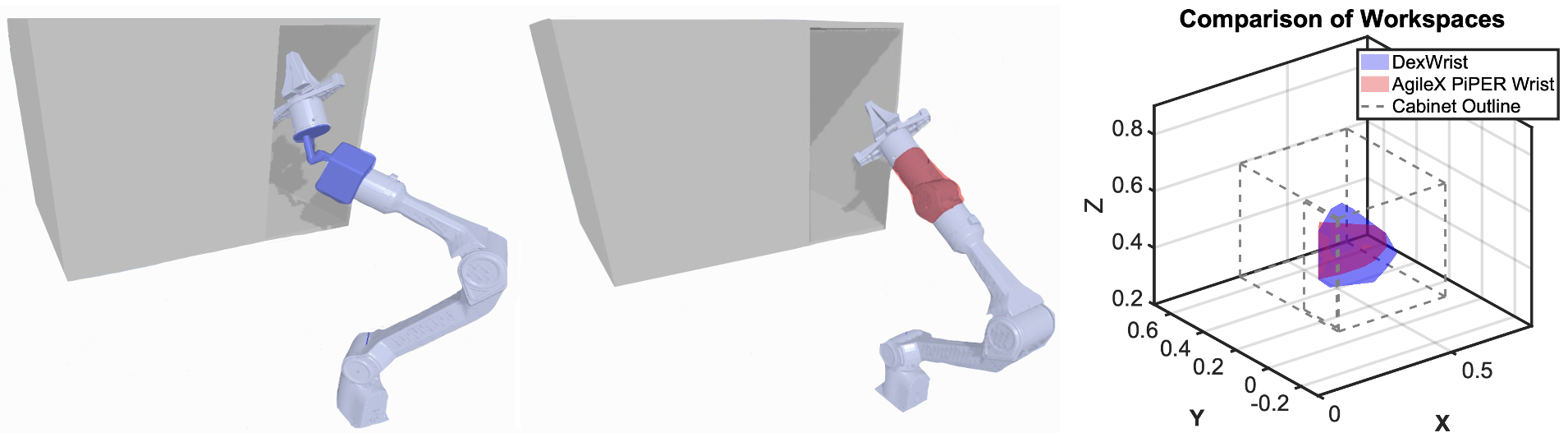
We compared the reachable workspace of the stock AgileX PiPER against the AgileX PiPER with DexWrist in a simulated kitchen cabinet reaching task.

Target points were uniformly sampled inside the cabinet volume in PyBullet. Each point was tested for a collision-free inverse kinematics solution (robot self-collision and cabinet collision).

Workspace comparison between stock AgileX wrist and DexWrist

DexWrist increased the number of reachable targets by 88% over the stock serial wrist.

The stock wrist fails primarily at targets deep inside the cabinet and near the walls, where the serial joint layout forces self-collisions or cabinet collisions.

Teleoperation User Study

More efficient and intuitive teleoperation in constrained, human-centric environments due to its human-like wrist dexterity

Metric Task Base DexWrist
Operator
Time (s)
Fridge 63.5 38.7
Wipe 21.5 6.6
Cable 76.3 28.0
Drawer 57.2 29.6
Resets Fridge 1.7 1.0
Wipe 0.2 0.0
Cable 0.6 0.4
Drawer 0.6 0.3

Fewer environment resets required and less overall human teleoperator time in constrained spaces.

DexWrist’s human-like kinematics and design collect shorter trajectories and more natural behavior for manipulation in constrained, human-centric environments and compliance-critical tasks. 1.3–2.2× shorter individual demonstrations.

Policy Learning Results

Reduced horizon lengths in constrained environments leads to improved success rates for behavioral cloning policies

DexWrist achieved 50–76% relative improvement in policy success rates

Autonomous Task Completion

Diffusion policies trained for DexWrist reduced task completion times by 3–5×

System Policy Task Completion Time (s)
Mean ± SD Min Max
AgileX + stock wrist 91.0 ± 7.9 55.2 134.2
AgileX + DexWrist (Ours) 28.1 ± 2.2 20.5 49.0
UR3e + stock wrist 21.2 ± 10.5 12.7 34.6
UR3e + DexWrist (Ours) 4.3 ± 1.2 1.9 6.5

The AgileX + DexWrist completed the constrained pick-and-place task 3.24× faster, and the UR3e + DexWrist completed the dynamic wiping task 4.92× faster than the default configurations.